The Bedding Edit
Choosing Organic Linen Sheets: What to Know About Feel, Fit, and Care
Linen’s appeal is not the polished smoothness of cotton sateen or the crisp uniformity of percale. It is its airy texture, relaxed drape, and capacity to become more supple with time. Choosing organic linen sheets is a matter of considering not just the fiber, but also certification, construction, mattress fit, and the care routine that will keep the fabric looking and feeling its best.
Published October 20, 2026
The quiet luxury of linen
There is a particular ease to a linen-made bed. The surface may be softly rumpled rather than pressed into a crisp plane; the fabric has a relaxed drape and a tactile character that looks lived in from the beginning. Linen suits a bedroom that feels considered without appearing overly arranged. Its appeal is as much about that honest texture as it is about practical qualities such as airflow and moisture management.
Linen begins as flax, a plant whose fibers are spun into yarn and woven into cloth. The resulting textile is known for strength and breathability, though the precise feel varies with the yarn, weave, finishing, and weight. A newly purchased set may feel more textured than a familiar cotton sheet. With regular laundering and use, many linen fabrics soften while retaining their distinctive, slightly irregular hand.
Organic linen adds another consideration: how the flax was grown and how the textile was processed. A credible certification can give shoppers a more useful way to assess those claims than broad phrases such as “natural” or “eco-friendly.” The most satisfying purchase brings these questions together: Does the fabric suit your body and climate? Is the sourcing claim clear? Will the fitted sheet work with your mattress? And is the care practical for your household?
What organic means in linen bedding
When a sheet is described as organic linen, the claim generally concerns the flax fiber and the standards used to verify its production. Organic certification is not a promise that every textile process has no environmental impact, nor does it establish that a fabric will feel a particular way. It is one part of a broader account of sourcing and manufacture.
Look for the name of the certification and, where possible, details about which stages of production it covers. The Global Organic Textile Standard, or GOTS, is one recognized textile standard. Its certification framework addresses organic fibers alongside environmental and social criteria in processing. The exact scope depends on the certified product and supply chain, so a label or brand statement should be read carefully rather than treated as a universal guarantee about every possible attribute.
It is also helpful to distinguish fiber certification from phrases about the finished textile. “Organic flax” refers to the fiber’s sourcing; claims about dyes, finishes, water use, or manufacturing conditions concern other parts of the process. If a detail matters to you, seek a specific explanation. Transparent product information is more valuable than an impressive-sounding collection of vague assurances.
- Check the certification: Look for a named standard and a clear statement about the product’s certification.
- Read the fiber description: Confirm whether the fabric is described as organic flax or organic linen, and whether the information distinguishes the fiber from the finished bedding.
- Review origin details: A product may name where the flax was grown, where the linen was woven, and where it was finished or made. These locations can differ.
- Question broad claims: Words such as “clean,” “chemical-free,” and “sustainable” are not substitutes for precise sourcing or certification information.
How linen feels against the skin
Linen is often described as breathable and temperature regulating. In practical terms, its structure can allow air and moisture to move through the fabric, which many sleepers appreciate in warm conditions or when they tend to sleep hot. The experience depends on more than the fiber name: room temperature, duvet weight, personal comfort, fabric density, and construction all play a part.
The texture is distinct. Linen can feel dry, crisp, or softly nubby at first, with a loose, fluid quality that differs from the sleek surface of sateen. It may feel cool when first getting into bed, yet linen is not simply a “summer-only” textile. Its capacity to breathe can make it comfortable through changing seasons, especially when layered appropriately. Still, warmth is affected by the whole bed, not just the sheet.
Some shoppers expect organic linen to arrive as soft as a well-worn cotton T-shirt. That expectation can lead to disappointment. Linen’s character is part of its appeal, and a more relaxed hand may be intentional rather than a sign of poor quality. If possible, assess fabric descriptions and return policies before purchasing. Words such as “stone-washed” or “relaxed” may signal a softer, more lived-in finish, though they do not replace a clear description of the actual cloth.
For comparison, cotton percale tends to have a crisp, matte feel, while cotton sateen is generally smoother, with a more fluid drape. Linen occupies a different sensory register: tactile, breathable, and gently irregular. Neither weave nor fiber is automatically best. The right choice depends on the feeling you want when you settle into bed.
Fit begins with the mattress, not the label
A beautiful sheet set that slips off the corners is rarely a pleasure. Before choosing a color or finish, measure the mattress and check the fitted sheet’s dimensions. Mattress labels such as queen or king describe a standard surface size, but they do not tell you the full height of the bed. A pillow-top, mattress topper, or protective pad can add meaningful depth.
Compare your mattress height with the fitted sheet’s stated pocket depth. Some linen sets specify a pocket around 15 inches, but specifications vary by maker and collection. Do not assume every sheet in a brand’s range has the same depth, and do not count on elastic to compensate for a substantial mismatch. A fitted sheet should cover the mattress securely without stretching excessively at the corners.
When measuring, include any topper or pad that will remain on the bed under the sheet. Measure from the bottom edge to the top of the full sleeping surface, then compare that figure with the product’s pocket depth. If your mattress has an unusual profile or is especially deep, check whether the dimensions refer to the mattress alone or to the intended total depth. When the listing is unclear, asking the seller before purchase can spare a frustrating return.
Also check what the set includes. A complete set commonly contains a fitted sheet, a flat sheet, and pillowcases, but the number and size of pillowcases may depend on the bed size. Some collections offer individual pieces, which can be useful if you need a replacement fitted sheet or prefer to build a set gradually. Confirm pillowcase measurements too, particularly if your pillows are unusually full or oversized.
A considered look at Naturepedic linen sheets
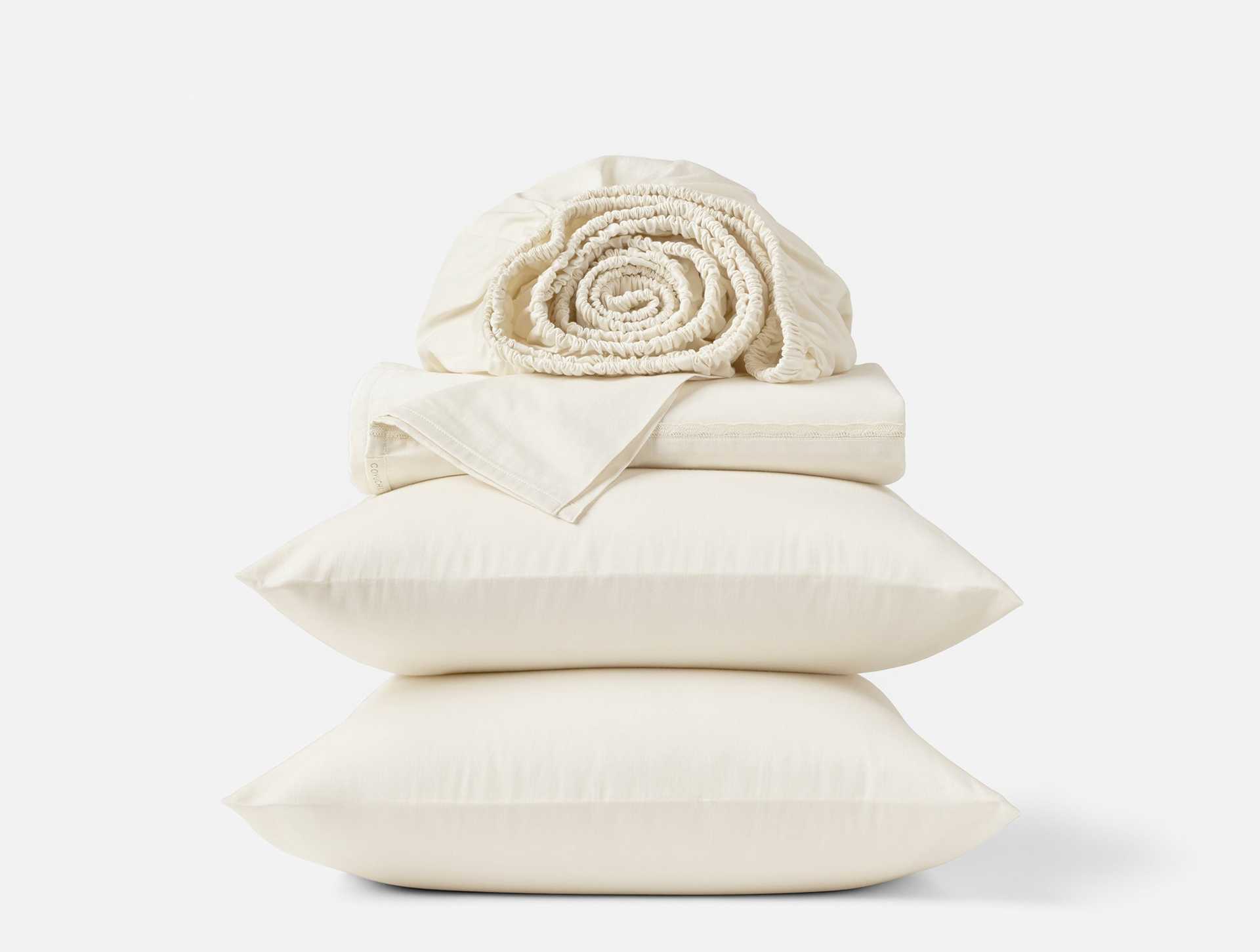
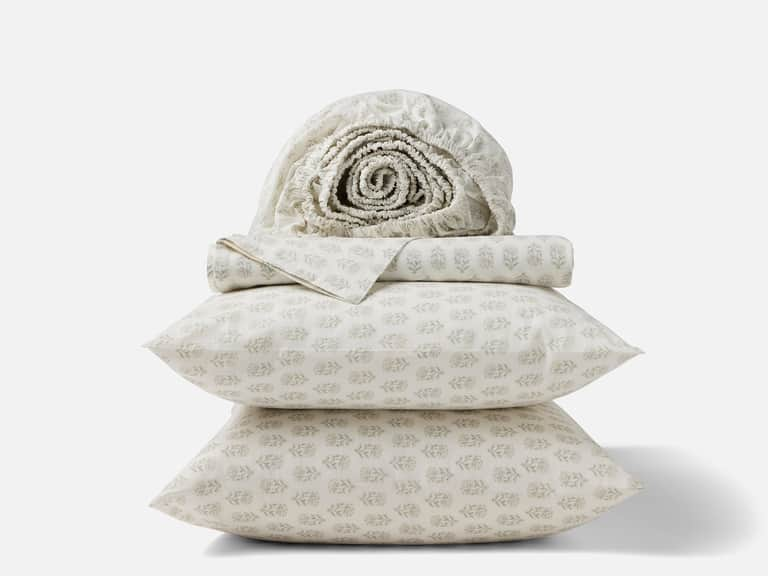
Naturepedic’s organic linen sheets offer one example of the details worth examining when comparing linen bedding. Their product information describes GOTS-certified organic flax or linen, with flax grown in France and the bedding made in a GOTS-certified organic facility in India. The listed fabric weight is 185 grams per square metre, and the set is described as including a flat sheet, fitted sheet, and two pillowcases.
Those specifications help turn a general impression into a more informed comparison. Fiber origin and manufacturing location answer different questions; neither alone describes the complete supply chain. A stated fabric weight can offer a point of reference, but it does not, by itself, tell you whether the fabric will feel light or substantial to your hand. Weave and finishing also influence the finished textile.
The product information lists a 15-inch pocket on the fitted sheet and sizes including queen, king, and California king. That makes pocket depth a particularly practical detail to verify against your own mattress setup. Listed care guidance calls for machine washing warm, tumble drying low, and avoiding bleach. Always follow the instructions provided with the exact item you purchase, as care directions can differ among products and may be updated.
Use product specifications as a starting point, not a substitute for your own priorities. A shopper drawn to a natural, textured surface may respond differently from someone who wants a smooth, cool-to-the-touch cotton percale. The best choice is the one whose material story, dimensions, care requirements, and feel align with everyday life.
Linen sheet care, made simple
Good linen care is less about elaborate rituals than consistency. Follow the label first: fiber blends, finishes, colors, and construction can call for different instructions. If the maker recommends a gentle cycle or a lower drying temperature, those directions take priority over a general rule. For many linen sheets, a mild wash and restrained heat are a sensible place to begin, but the product’s own care label is the authority.
- Wash with care: Avoid overcrowding the machine so the fabric can move freely. Wash with similar colors and use a detergent appropriate for the textile.
- Choose a gentle approach: A gentle cycle and moderate water temperature can help reduce unnecessary stress on fibers. Follow the label if it specifies otherwise.
- Keep drying temperatures modest: High heat can be hard on textiles and may encourage excess shrinkage or wear. Use the recommended setting and remove the sheets when they are dry.
- Skip unnecessary bleach: Chlorine bleach can damage fibers and alter color. Use bleach only when the care instructions explicitly allow it, and choose a suitable alternative if the label permits one.
- Do not over-iron by default: Linen’s natural creases are part of its relaxed appearance. If you prefer a smoother finish, check the care guidance and use the recommended iron setting.
It is tempting to judge linen by how crisp it looks straight from the dryer. Yet its appeal is often greatest when the fabric is allowed to retain a little softness and movement. Removing sheets promptly can help prevent deep creases, while folding or putting them back on the bed once dry keeps the routine simple. If the care label allows it, a brief airing can also be a low-effort way to refresh bedding between washes.
Durability and the rhythm of wear
Linen is valued for its strength, but no sheet is immune to wear. Frequent washing, high dryer temperatures, overloading, sharp zippers, and rough handling can shorten the life of bedding. Quality also depends on yarn, construction, finishing, and how well the product suits the bed. A well-matched fitted sheet is less likely to strain at the corners, where fabric tension can become concentrated.
Over time, linen often becomes more supple. That gradual change is one reason people choose it: a sheet can feel less structured as it is used and laundered, while keeping its characteristic texture. Softening is not a reason to ignore care instructions, however. Gentle, regular laundering is more dependable than trying to accelerate the process with harsher washing or hotter drying.
Consider whether you need one set or a rotation. Having a second set can make laundry day easier and reduce pressure to wash and dry the same sheets in a hurry. If buying a full set feels excessive, check whether individual pieces are available and whether later replacements will match the same color and dimensions. Small practical decisions can make premium bedding more useful over the long term.
Color, texture, and the bedroom palette
Linen’s surface gives color a particular quality. A solid hue may appear softly nuanced rather than perfectly flat, while natural undyed tones can bring warmth without dominating a room. White and pale neutrals emphasize the fabric’s texture; deeper shades create a quieter, more cocooning mood. Because linen drapes with a relaxed ease, it can make even a neatly made bed feel less formal.
When considering color, check whether the product description refers to dyed, printed, or undyed fabric. These terms speak to appearance and finishing, not necessarily to a complete environmental assessment. If you are building a bedding collection over time, confirm that separate pieces are from the same color and product range; shades and finishes can vary between collections or production runs.
There is no need to make the bed look perfectly pressed to make linen feel intentional. A simple arrangement—well-fitted sheets, a duvet cover in a complementary tone, and pillows in proportion to the bed—lets the cloth’s natural character take the lead. Linen is most compelling when it looks comfortable rather than staged.
A practical checklist before you buy
Before committing to a set, take a moment to compare the details that affect everyday use. A concise checklist can help separate a lovely description from a genuinely suitable choice.
- Is the fiber clearly identified as organic flax or organic linen?
- Is a named certification provided, and is the product’s certification status clear?
- Are the growing, weaving, and manufacturing locations described where relevant?
- Does the fitted sheet’s pocket depth suit the mattress with its topper or pad?
- Are the bed size, sheet dimensions, and pillowcase count stated?
- Does the listed feel—relaxed, crisp, weighty, or soft—match your preference?
- Can you follow the stated washing and drying instructions at home?
- Are return terms available if the fabric hand or fit is not right?
These questions are especially useful when shopping online, where the first impression is a product description rather than a hand on the cloth. Clear specifications, credible certification information, and practical sizing details are signs of a more useful listing. They cannot predict precisely how a fabric will feel to every sleeper, but they make comparison more grounded.
The best linen is the linen that suits your routine
Organic linen sheets bring a distinctive combination of texture, airflow, and ease. Their appeal is not about achieving a flawless, pressed finish; it is about a bed that feels breathable and quietly luxurious, with fabric that can soften through use. Certification and sourcing matter, but so do the dimensions that keep the fitted sheet in place and the care instructions you can realistically follow.
Start with the feel you enjoy. If a crisp cotton surface is your ideal, percale may be more immediately familiar; if you prefer a smooth, draped finish, sateen may be closer to your taste. If you are drawn to a breathable textile with a relaxed, tactile hand, linen may be the more compelling choice. Then check the certification, origin details, set contents, pocket depth, and care label with the same attention you give to color and styling.
The result need not be complicated. Choose a fabric that feels right, a fit that works with your actual mattress, and a care routine that supports regular use. With those essentials in place, linen can become not just a considered purchase but a natural part of the daily ritual of settling in for the night.
Frequently asked questions
Do organic linen sheets soften over time?
Many linen fabrics become more supple with regular use and laundering. The pace and degree of softening depend on the fabric’s yarn, weave, finish, and care. Linen may retain more texture than cotton even as it grows softer.
Are linen sheets suitable for warm sleepers?
Linen is often chosen for its breathable structure and moisture management. It may feel comfortable for warm sleepers, but the experience also depends on room conditions, duvet weight, fabric construction, and individual preference.
What fitted-sheet pocket depth should I choose?
Measure the mattress together with any topper or pad that will remain beneath the sheet. Compare the combined height with the fitted sheet’s stated pocket depth, and allow for a secure fit without excessive stretching at the corners.
Should linen sheets be ironed?
Ironing is optional and a matter of preference. Linen’s natural creases are part of its relaxed appearance. If you prefer a smoother finish, check the item’s care instructions for an appropriate iron setting.